


If you looked at Commerce Hub a while back and decided it wasn't quite there yet, it might be worth another look. HubSpot didn't just rename it in June 2026, they rebuilt it into something with a genuinely different scope, and it’s really exciting!
Why did HubSpot make this change?
The problem HubSpot was solving isn't really about software features, it's about where revenue information actually lives. According to HubSpot's own research:
-
A large majority of revenue leaders say their AI and reporting tools don't have access to complete, accurate revenue data,
-
And a similar majority of teams miss renewals simply because that data lives somewhere other than the customer record.
Only around a third of finance and sales teams can close out the month working from the same numbers. That's not really a people problem, it's a context problem: what a customer bought, what they're paying, and what's coming up for renewal often sits in a separate billing tool, a spreadsheet, or a CPQ system that never quite talks to the CRM.
"I’ve been waiting a long time for this one, given we often have to build out custom processes here. I’m most excited about the fact that quoting, contracts and billing finally sit in one place instead of three."

What's different now?
Revenue Hub keeps everything Commerce Hub could already do and expands well beyond it.
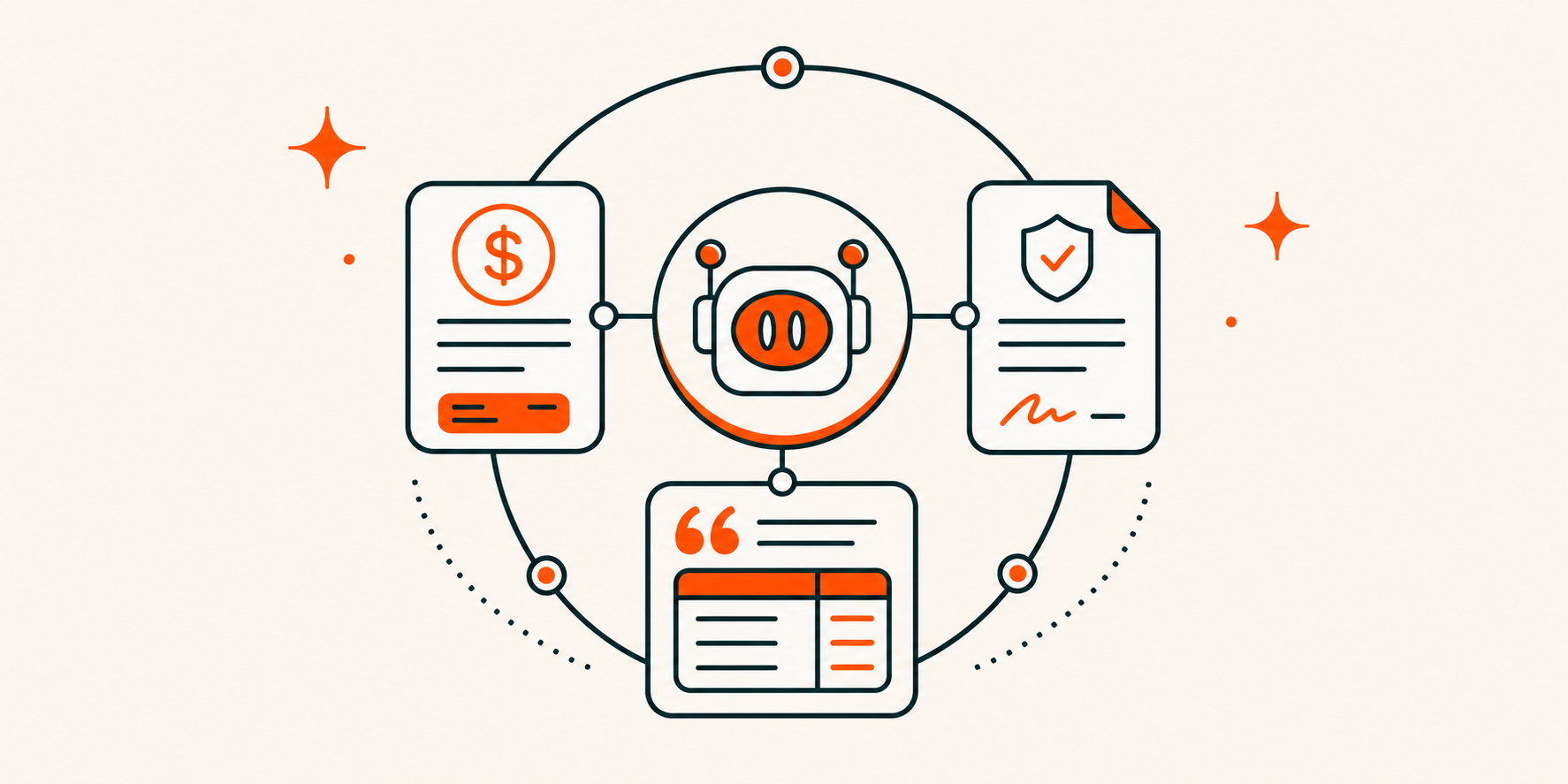
- Contracts are now a real, central object, and one of the more useful changes is what happens automatically: once a quote is accepted, HubSpot creates the contract record itself, starts billing, generates invoices and tracks renewals, without anyone manually handing the deal from one system to the next.
- Quoting has also been built out significantly, to the point where quotes can be built from AI prompts and styled with fully custom templates. The more interesting part is what custom quote modules can start to make possible.
- Instead of working from a fixed template, teams can use modules that pull deal information, custom object data, live quote status, country-based terms and potentially line-item-specific content directly into the quote.
- For a business, that means a quote can reflect how the deal actually works: the products being sold, the region involved, the terms that apply, and the extra operational detail a customer needs before they say yes.
- This is where the Revenue Hub shift starts to feel less like a cosmetic upgrade and more like a more flexible quote-to-cash system.
- Billing and payments remain, now sitting inside a more connected system rather than a standalone transactional tool, and invoices and payments sync automatically with accounting platforms like Xero and QuickBooks Online.
None of this requires ripping anything out if you're already using Commerce Hub, since everything you had carries forward, just with considerably more built around it.
Is it worth a second look for your business?
A few signs this is worth revisiting:
- If quoting, billing and contracts currently live in separate tools that don't talk to each other
- If renewals have quietly slipped through the cracks before
- If your sales and finance teams have ever closed the month with different numbers, in HubSpot's own data.
That last one affects roughly two-thirds of teams. If any of that sounds familiar, the expanded scope of Revenue Hub is genuinely aimed at solving it, not just adding features for the sake of it.
How EIO can help
Whether Revenue Hub is the right fit depends on your specific setup, how you quote, how complex your billing is, and what you're already running alongside HubSpot.
As an Elite HubSpot Solutions Partner, this is exactly the kind of change we help teams work through. If you're not sure whether it's worth the move, or just want someone to walk you through what's actually changed in plain terms, a quick chat is often the easiest way to find out.
Frequently asked questions